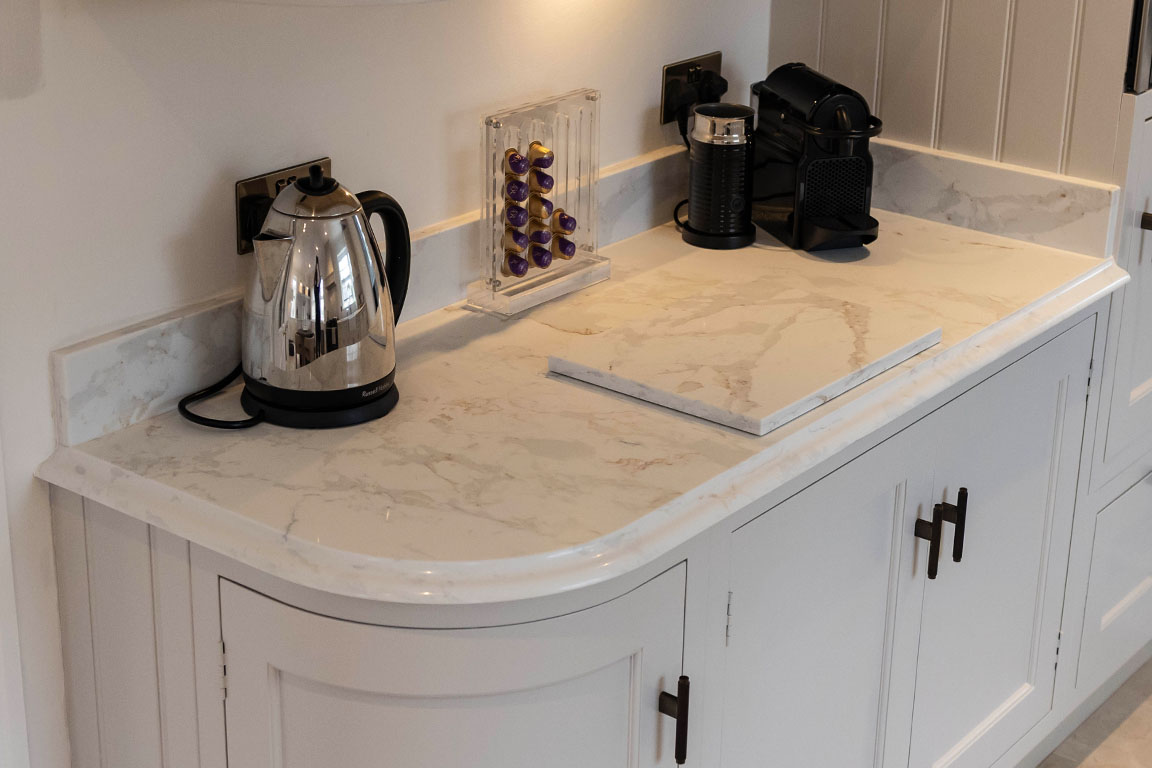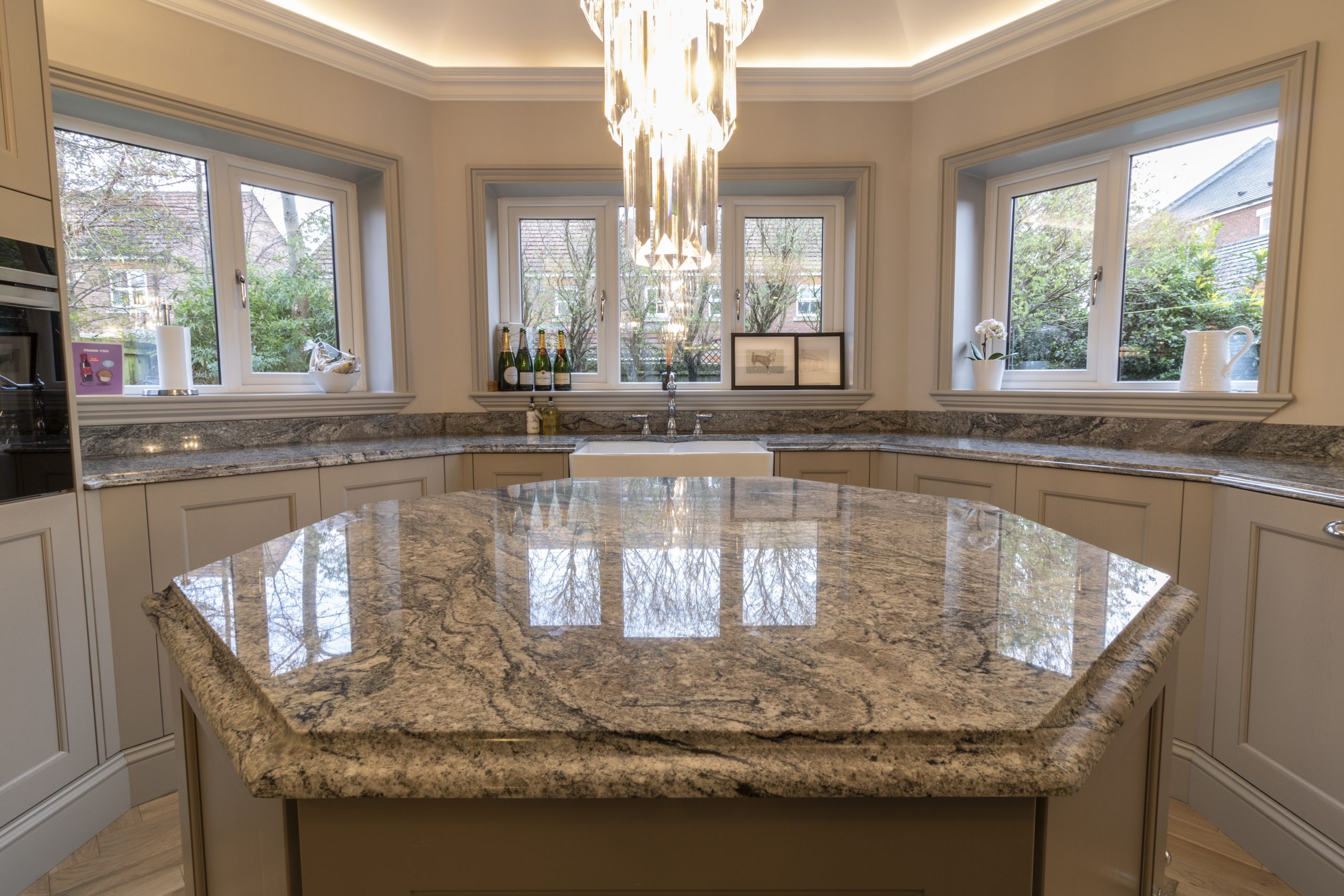


Calacatta quartz is the surface most Manchester homeowners reach for when they want the unmistakable look of Calacatta marble but cannot live with how real marble behaves in a working kitchen. The trouble is that most articles treat the two as interchangeable luxury options, when in practice one of them stains, etches and scratches in ways that catch buyers out within months. This guide explains exactly what you gain and what you give up when you choose engineered Calacatta quartz over the natural stone it imitates, so you can decide with your eyes open.
The comparison the showroom won’t make for you
Calacatta marble is a natural metamorphic stone, prized for its bright white background and bold, grey-to-gold veining. Calacatta quartz is an engineered surface, around 90 per cent ground quartz bound with resin and pigment, printed and structured to mimic that same veining. They can look strikingly similar across a room. They could not be more different to live with.
The reason the difference matters is simple. Marble is soft and porous. Quartz is hard and non-porous. Everything that frustrates marble owners traces back to the first fact, and everything that reassures quartz owners traces back to the second.
What actually matters when you choose
Etching, the marble problem nobody mentions until it happens
This is the single biggest reason people regret real marble. Marble is calcium based, so anything acidic, lemon juice, wine, vinegar, even some cleaning sprays, reacts with the surface and leaves a dull, slightly rough mark called an etch. It is not a stain you can wipe away, it is a change to the stone itself. Calacatta quartz does not etch, because there is no reactive calcium carbonate at the surface. For a busy kitchen, this one difference often settles the decision.
Staining and porosity
Marble is porous and will absorb oil, wine and pigment if it is not sealed and maintained, and even sealed marble asks for care. Calacatta quartz is non-porous, so spills sit on top and wipe off, and it never needs sealing. If you cook with turmeric, red wine or olive oil and you want to stop thinking about it, quartz removes the worry.
Hardness and daily wear
Marble scratches more easily and shows wear at high-use spots over time, which some owners love as patina and others see as damage. Calacatta quartz is far harder and resists the everyday scuffs and light scratches of normal kitchen life. Neither should be cut on directly, but quartz tolerates real use with less visible consequence.
Consistency versus the real thing
Here is where marble wins for some buyers. Every marble slab is unique, with depth and movement no print can fully replicate, and to a trained eye the real stone still reads as more alive. Calacatta quartz gives you predictable, repeatable veining you can match across a long run and an island, which is a strength if you want certainty and a slight compromise if you want one-of-a-kind character.
Heat
Worth a clear word, because it cuts the other way. Marble handles heat better than quartz, since quartz contains resin that can scorch under a pan straight off the hob. Whichever you choose, use trivets, but be aware this is the one practical area where natural marble has the edge.
A real scenario
A family in Didsbury falls for a Calacatta marble island in a showroom, installs it, and within three months the area around the prep zone is dotted with dull etch marks from everyday cooking. The look they paid for is gone. A neighbouring kitchen in Hale specifies a high-quality Calacatta quartz with similar veining, cooks just as hard, and two years on it still looks like the day it was fitted. Same aesthetic ambition, two very different outcomes, decided entirely by whether the surface could cope with the way the kitchen is actually used.
The insight buyers miss
The honest framing is this. If you want the Calacatta look and you want a surface you never have to baby, Calacatta quartz is almost always the right answer, and the small loss of natural depth is a fair trade for never etching or staining. If you are a careful cook, you genuinely value the uniqueness and patina of real stone, and you accept the maintenance as part of the deal, marble can be worth it. The mistake is wanting marble’s soul with quartz’s indifference to abuse. That combination does not exist, and pretending it does is how people end up disappointed.
How Meridian Granite approaches it
We are a family-run fabricator based in Pudsey, Leeds, and we install across Manchester and the Northwest, including Altrincham, Hale, Wilmslow, Didsbury, Bramhall and Stockport. Because we source and fabricate in house, we can show you full slabs of Calacatta quartz from brands such as Silestone and Caesarstone rather than small chips, match the veining across your island and runs before cutting, and talk through honestly whether your kitchen and habits point to engineered quartz or natural stone. The recommendation follows your kitchen, not our stock.
The bottom line
Calacatta quartz gives you the prized marble look without marble’s two great weaknesses, etching and staining, while marble keeps the edge on heat tolerance and natural, one-off character. For most working kitchens across Manchester and the Northwest, the practical choice is engineered Calacatta quartz, and the buyers who choose it rarely look back. If you want to compare a real Calacatta quartz slab against natural marble side by side, our showroom can show you both and tell you the truth about each.