

Dekton worktops are often described as indestructible, and that is precisely the problem with most of the advice written about them. When every surface is marketed as bulletproof, families renovating a kitchen have no way of knowing which claims actually hold up once the school run starts, the air fryer comes out and someone leaves a felt tip uncapped on the island. This article takes a more honest approach. It explains what Dekton actually is, where it genuinely outperforms quartz and granite in a family setting, and just as importantly, the situations where it is not the right choice at all.
At Meridian Granite, we fabricate and install Dekton kitchen worktops alongside quartz, granite and quartzite every week, so we see how each material behaves in real homes rather than in showroom conditions. That comparison is what this guide is built on.
What Dekton Actually Is (and Why It Behaves Differently)
Dekton is an ultra-compact surface manufactured by Cosentino, the same group behind Silestone. It is made by blending the raw materials found in glass, porcelain and quartz, then compressing them under extreme heat and pressure in a process Cosentino calls particle sintering. In simple terms, the factory replicates what the earth does to natural stone over thousands of years, but in a matter of hours.
The result is a surface with almost zero porosity. There is no resin binding the material together, which is the single most important difference between Dekton and quartz. Quartz worktops are roughly 90 per cent natural mineral held together with polymer resin, and that resin is the weak point. It softens under high heat, it can yellow in strong sunlight and it is what staining agents cling to when a seal or polish wears.
Dekton has none of that. No resin, no sealing, no annual maintenance routine. This is why it sits in a different category from both natural stone and engineered quartz, and why it is often grouped with porcelain worktops, although its density and thickness options set it apart from standard porcelain slabs too.
The Reality of a Family Kitchen
Before comparing materials, it is worth being blunt about what a family kitchen actually endures, because this is where buying decisions should start.
A typical week involves hot pans moved in a hurry, baking trays straight from a 220 degree oven, lemon juice and vinegar left sitting during dinner prep, turmeric and tomato-based sauces, children doing homework and craft projects on the island, and cutlery, keys and school bags dragged across the surface daily. Add direct sunlight through bifold doors or a large window, which is increasingly common in extended kitchens, and you have a genuinely demanding environment.
Most worktop failures we are asked to assess are not dramatic. They are slow accumulations: a scorch ring from a pan on quartz, a dull patch where an acidic spill etched a polished surface, fine scratching around the sink, or fading where sunlight hits the same spot every afternoon. A busy household accelerates all of it.
Where Dekton Worktops Genuinely Win in Family Homes
Heat resistance you do not have to think about
This is the clearest advantage. Dekton is one of the very few heat-resistant worktops where you can place a hot pan directly on the surface without a trivet and without consequence. Quartz cannot make that claim honestly. Its resin content means sustained contact above roughly 150 degrees risks scorching or thermal shock, and we have seen plenty of quartz tops with permanent pan rings to prove it.
For a family kitchen, the value is not really about the pan itself. It is about removing a rule that other people in the house will inevitably break. You can train yourself to use a trivet. Training teenagers, guests and grandparents is another matter. Dekton takes the rule away entirely.
Scratch resistance that survives real use
Dekton is harder than knife steel, which makes it one of the most scratch-resistant worktops available. You can chop directly on it, although we still recommend a board, mainly because the surface will blunt your knives rather than the other way round.
In family terms, this matters most in the zones people forget about: the run of worktop by the back door where bags and bike helmets land, the island edge where stools scrape, and the area around the sink where pans and oven trays get stacked. These are the spots where quartz and polished granite show fine abrasion over five to ten years. Dekton simply does not.
Stains, felt tips and the non-porous advantage
Because Dekton has near-zero porosity, there is nowhere for staining agents to penetrate. Red wine, beetroot, turmeric, coffee and, yes, permanent marker can be cleaned off with standard household products, even hours later. There is no sealing schedule, which is one of the reasons families specifically ask us for low-maintenance worktops and end up shortlisting Dekton alongside quartz.
Granite, by contrast, needs periodic sealing to stay stain resistant, and marble is simply not a sensible choice for most family kitchens regardless of how good it looks on Instagram.
UV stability for bright, extended kitchens
This one is rarely mentioned in generic guides, and it is arguably Dekton’s most underrated property. Dekton is fully UV stable, which is why it is also used on building facades and outdoor kitchens. Quartz is not. In south-facing kitchens with large glazing, we have seen quartz worktops develop noticeable colour shift within a few years, particularly in whites and creams, because sunlight degrades the resin.
If your renovation includes bifold or sliding doors and the worktop will sit in direct sun for hours each day, this single factor can settle the Dekton versus quartz decision on its own.
Continuity from kitchen to garden
Because it is UV stable and frost resistant, the same Dekton material can run from your kitchen island out to an outdoor BBQ area or garden kitchen. For families extending and landscaping at the same time, that continuity is difficult to achieve with any other surface, and it is a detail interior designers increasingly specify.
Where Dekton Is Not the Right Choice
An honest assessment has to include the drawbacks, because Dekton is not the universal answer some retailers suggest.
Edge impact is its weak point. Dekton is extremely hard, but hardness and toughness are not the same thing. A heavy cast iron pan dropped squarely on an exposed edge or corner can chip it, and repairs on ultra-compact surfaces are more difficult and less invisible than repairs on quartz or granite. If your household is genuinely chaotic around exposed corners, a mitred or eased edge detail helps, but the risk never reaches zero.
It costs more, installed. The slab price is only part of it. Dekton is demanding to cut and handle, requires diamond tooling and experienced fabricators, and unforgiving of poor templating. That is reflected in the installed price, which typically sits above mid-range quartz. If the budget is tight and the kitchen does not face heavy sun or heavy heat use, a good quality quartz is often the more sensible spend.
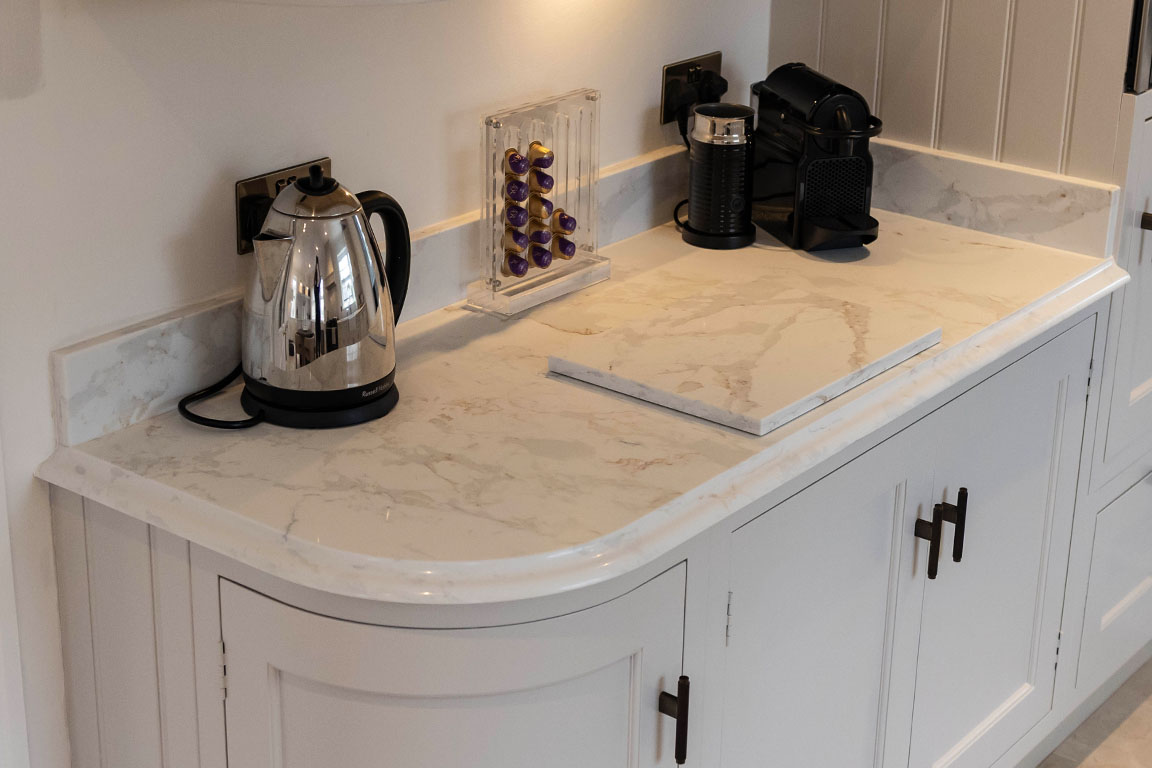
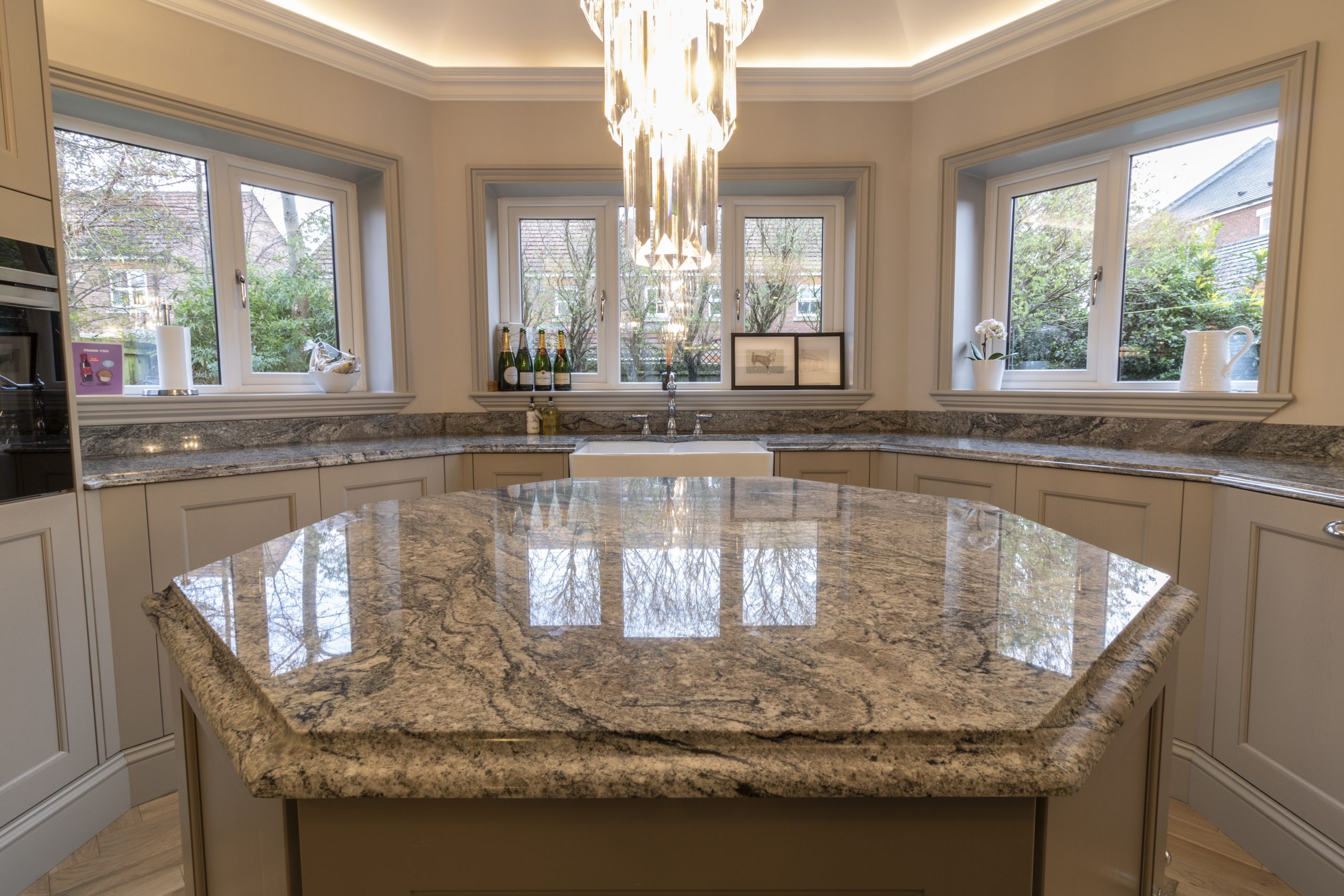
It reads as engineered. Dekton offers convincing marble-effect and industrial designs, but it will never have the depth and random veining of natural quartzite or granite. Buyers who want the surface to be the emotional centrepiece of the room sometimes find natural stone more satisfying, maintenance trade-offs and all.
Fabricator quality matters more than the brand. More Dekton problems are caused by poor fabrication and installation than by the material itself. Unsupported overhangs, badly positioned cut-outs and rushed handling are where cracks originate. Whoever you buy from, ask specifically about their experience with ultra-compact surfaces, not just stone in general.
Three Real Scenarios from Family Kitchens
The south-facing extension. A family in Leeds extended into the garden with four metres of bifold glazing and wanted a pale, marble-look island directly in the sun path. Quartz was ruled out on UV grounds alone. Dekton in a 20mm profile gave them the look with no fading risk, and the island now doubles as a homework station that shrugs off pen marks.
The serious home cook. A household where both adults cook daily, with pans moving constantly between hob, worktop and table. Their previous quartz top carried two scorch marks within 18 months. Dekton removed the trivet rule completely, and three years on the surface around the hob is indistinguishable from the day it was installed.
The tight-budget refit. A young family refreshing a modest galley kitchen with no direct sunlight and a limited budget. We recommended quartz, not Dekton. The performance gap did not justify the price difference in their conditions. Being steered away from the more expensive option is usually a good sign you are dealing with a fabricator rather than a salesperson.
How to Decide: A Simple Framework
Rather than asking whether Dekton is the best worktop, ask which pressures your kitchen actually faces.
Choose Dekton when at least two of these apply: the worktop sits in direct sunlight for part of the day, hot cookware is placed down frequently, the household is hard on surfaces through kids, pets or volume of use, you want zero-maintenance ownership with no sealing, or you want matching indoor and outdoor surfaces.
Lean towards quartz when the budget is the deciding factor, the kitchen has no strong UV exposure and you are confident trivets will actually get used. Lean towards granite or quartzite when natural character matters more to you than absolute practicality and you are comfortable with occasional sealing.
Family kitchen worktops fail through accumulation, not accidents. The right material is the one that neutralises the specific habits of your household, and for many busy homes that points to Dekton. For others it genuinely does not.
Why Homeowners Choose Meridian Granite for Dekton
Meridian Granite is a family-run stone specialist based in Pudsey, Leeds, supplying and installing Dekton by Cosentino alongside quartz, granite and exotic quartzite across Yorkshire and nationwide. Everything is handled in-house, from laser templating through CNC fabrication to installation, which matters more with Dekton than with almost any other surface because ultra-compact materials punish inexperience.
With more than 15 years in the industry and over 15,000 completed kitchen projects, our team can show you full Dekton slabs in our showroom, explain honestly where it will and will not outperform quartz in your specific kitchen, and back the installation with proper aftercare guidance. Cosentino supports the material itself with a 25-year warranty, which says a great deal about how confident the manufacturer is in its durability.
Final Word
Dekton is at its best in kitchens that are genuinely hard on surfaces: bright, busy, heat-heavy family homes where nobody wants to police trivets, chopping boards and coasters. Its heat resistance, scratch resistance, stain resistance and UV stability are not marketing claims, they are structural consequences of how the material is made. Its trade-offs are equally real: higher installed cost, vulnerable edges under sharp impact and an engineered appearance.
If your kitchen faces the pressures described above, Dekton is likely to be the last worktop decision you make for decades. If it does not, save the money and put it into better cabinetry. Either way, get advice from a fabricator who works with the material daily, and ask them the awkward questions about edges, repairs and fabrication experience before you commit.
To see Dekton in person or discuss whether it suits your project, visit the Meridian Granite showroom in Pudsey or request a quote at meridiangranite.com.