

Choosing between granite vs quartz worktops is rarely settled by how a slab looks under showroom lights, because the surface that wins in a brochure is not always the one that survives ten years of school mornings, hot pans and red wine. Most comparison articles stop at “granite is natural, quartz is engineered” and leave you exactly where you started. This guide goes further, because the decision should be made on how you actually use your kitchen, not on which material photographs best.
The comparison most articles get wrong
The standard advice treats this as a contest with a single winner. It is not. Granite and quartz fail and excel in different places, and the right answer depends on your habits, your light, and your tolerance for maintenance.
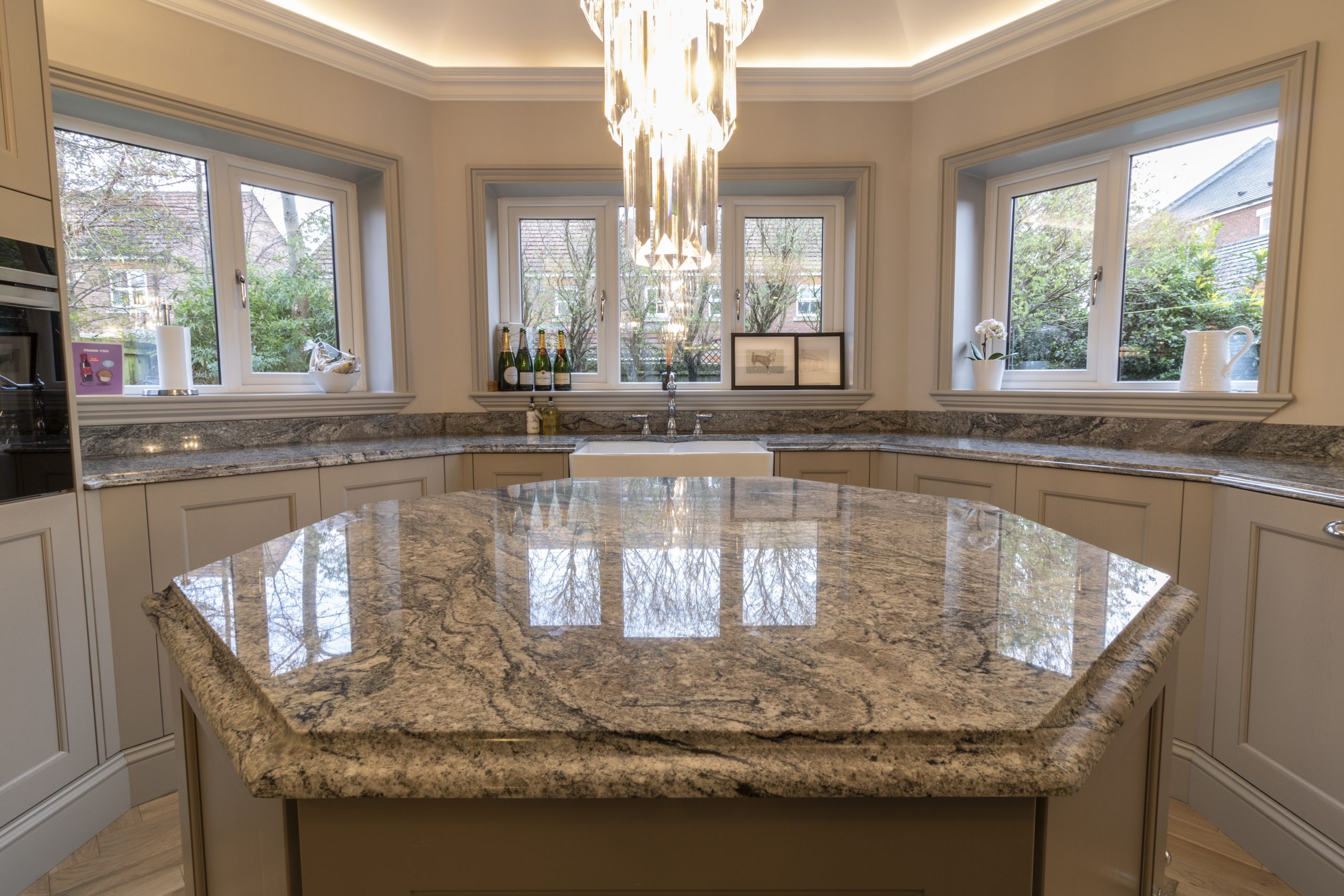
Granite is a natural igneous stone. Every slab is unique, it handles direct heat well, and a good piece reads as solid and characterful. Its weakness is porosity. Granite needs sealing, and the frequency depends on the stone. A dense black granite may need sealing every few years, while a lighter, more open stone may want it annually.
Quartz is engineered, typically around 90 to 93 per cent ground natural quartz bound with resin and pigment. It is non-porous, so it never needs sealing, and the colour and pattern are consistent across slabs. Its weakness is heat. The resin that makes quartz so practical is also the thing that scorches. Put a pan straight from the hob onto quartz and you risk a permanent mark.
What actually matters when you choose
Heat, and where your pans land
This is the single most decisive factor and the one buyers underestimate. If you cook on gas or a range and you tend to move pans straight from heat to worktop, granite forgives that habit and quartz does not. If you already use trivets and a hob with surrounding worktop you rarely touch with hot cookware, quartz is fine. Be honest about how you cook, not how you intend to cook.
Light, especially direct sun
A worktop under a south-facing window behaves differently from one in a north-facing galley. Some quartz colours, particularly bright whites and certain greys, can discolour or yellow over years of strong UV exposure, which is why many manufacturers limit outdoor warranties. Granite is UV stable. If your run sits in direct sunlight for hours a day, this matters.
Staining and the things you spill
Quartz wins here cleanly. Non-porous means coffee, turmeric, wine and oil sit on the surface rather than soaking in, and they wipe away. Granite can stain if left unsealed or if a spill sits on a worn seal, and oil marks on lighter granites are the usual culprit. If you have young children or you cook with a lot of pigment-heavy ingredients, the maintenance gap is real.
Pattern, and how much variation you can live with
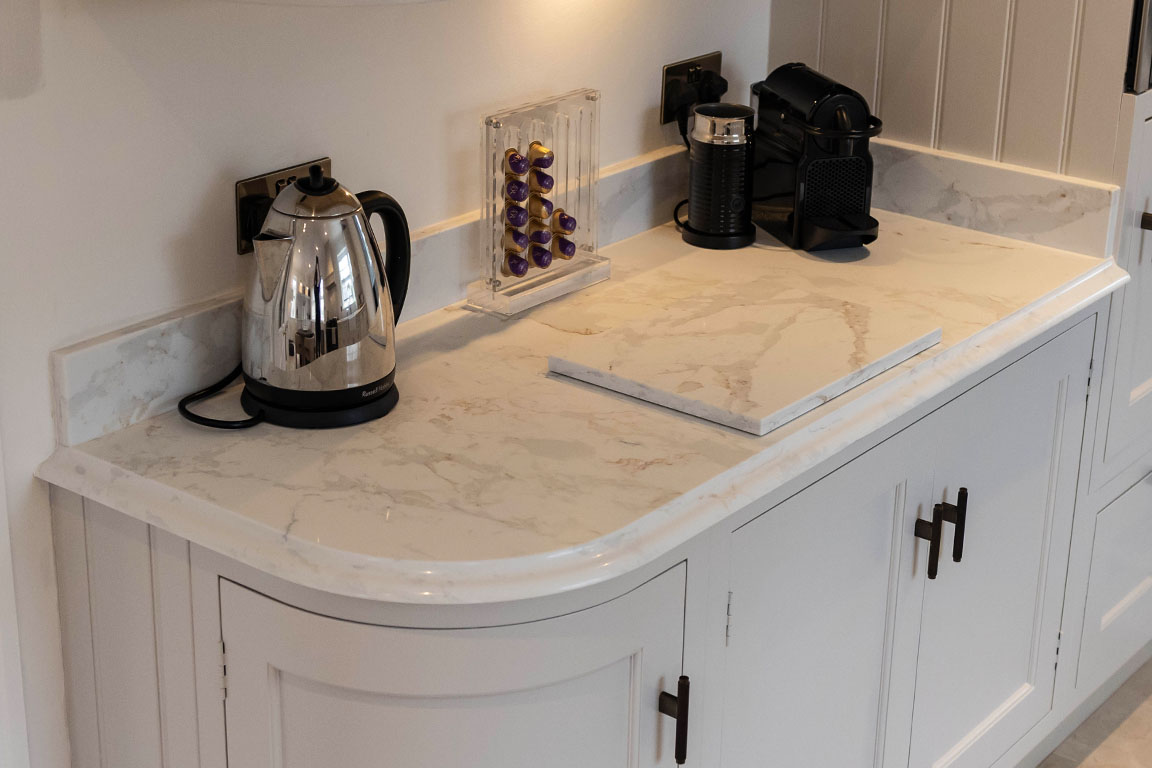
Granite’s movement is natural and unrepeatable, which is the point for some buyers and a problem for others. Two pieces from the same slab will differ, joins need planning, and what you see on a sample is not what you get across a full run. Quartz gives you predictability. If you want a Calacatta-style marble look with consistent veining and no surprises, quartz delivers it. If you want a surface no one else has, granite does.
Edges, joins and repair
Both materials can chip on a sharp impact, usually at a vulnerable edge or around a cut-out. Granite chips can sometimes be filled and disguised because the stone has natural variation to hide behind. Quartz chips are harder to disguise because the surface is uniform. Neither is fragile in normal use, but corners near dishwashers and bins take the most knocks.
Two real scenarios
A family kitchen with a gas range, three children and a cook who plates straight from the pan is a granite kitchen. The heat tolerance and the ability to hide the odd mark in natural movement matter more than perfect uniformity.
A design-led kitchen with an induction hob, a careful owner, and a south-facing extension with bifold doors is a more nuanced case. The owner wants a flawless marble look, which points to quartz, but the strong light is a flag. Here the sensible route is a quartz known for UV stability, or a quartzite if the marble look is non-negotiable and the budget allows.
The insight buyers miss
The granite versus quartz question is really two questions wearing one coat. The first is practical: how do you cook and how much maintenance will you tolerate. The second is aesthetic: do you want a natural, one-off surface or a consistent, designed one. People lose weeks trying to find a material that is best at everything. There isn’t one. The buyers who decide quickly are the ones who rank their own priorities first, then let the material follow.
A second point worth stating plainly: sample chips lie. A 100mm square tells you the colour and roughly the finish. It tells you almost nothing about how movement reads across a two metre run, how joins will land, or how the surface looks in your kitchen’s light. Viewing the full slab before fabrication is the step that prevents the most regret.
How we approach it at Meridian Granite
We are a family-run fabricator and installer based in Pudsey, Leeds, and we keep the whole process in house, from sourcing and laser templating through fabrication to installation. That matters for this decision because it means you can come to the showroom, see full slabs of granite and quartz rather than chips, and talk through how a specific stone will behave in your kitchen rather than in general. We work with both natural stone and engineered brands including Silestone and Caesarstone, so the recommendation is led by your kitchen, not by what we happen to have in stock.
The bottom line
Granite vs quartz worktops comes down to heat, light, maintenance and how much natural variation you want to live with. Granite rewards heavy, hot, hands-on cooking and buyers who want a one-off surface. Quartz rewards busy households who want low maintenance and a consistent, designed look, provided you respect its dislike of direct heat and watch the light in sun-heavy rooms. Decide which of those describes your kitchen, view the full slab before you commit, and the choice makes itself.
If you want to see both materials side by side and talk through your specific layout, our team in Pudsey can template, fabricate and install the right surface for your kitchen.