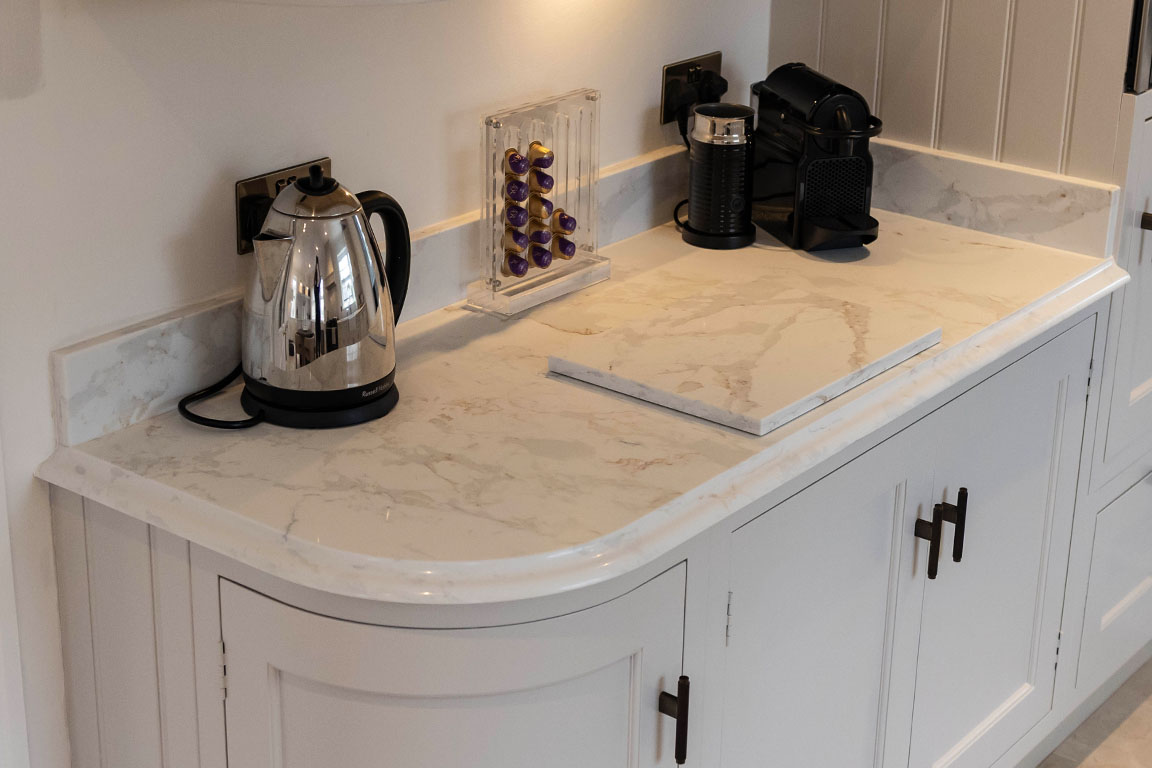


Knowing how to clean and care for quartz worktops and granite worktops properly is what keeps a premium surface looking new for fifteen years instead of tired in three, yet most care advice online is vague to the point of useless. It tells you to use warm soapy water and stops there. The real risk to your worktop is not dirt, it is the well-meaning habits and the wrong products that quietly damage the surface over time. This guide gives the specific dos and don’ts for each material, including the common mistakes that cause the most regret.
Why generic cleaning advice fails
Granite and quartz are different materials and they want different care, so blanket advice that treats all stone the same is part of the problem. Granite is natural and porous, sealed to resist stains. Quartz is engineered and non-porous, with a resin binder that has its own vulnerabilities. A product that is fine on one can shorten the life of the other. Once you understand why each surface behaves as it does, the right routine becomes obvious.
Caring for quartz worktops
The daily routine
For everyday cleaning, warm water, a little washing-up liquid and a soft cloth is genuinely all quartz needs. Because it is non-porous, nothing soaks in, so wiping spills as they happen keeps the surface pristine. Dry with a soft cloth to avoid water spotting on darker colours.
What to avoid on quartz
- Direct heat. This is the number one cause of quartz damage. The resin binder can scorch or discolour permanently, so never place a pan straight from the hob or oven onto it. Always use a trivet.
- Harsh chemicals. Bleach, oven cleaner, paint thinner and strongly alkaline or acidic cleaners can dull or discolour the surface. Avoid them entirely.
- Abrasive pads. Scouring pads and gritty cream cleaners can scratch the finish over time. Use a soft cloth or a non-scratch sponge.
- Prolonged UV in some colours. Certain bright whites and greys can shift colour under years of strong direct sunlight, which is worth knowing for a worktop under a south-facing window.
Dealing with stubborn marks on quartz
For dried-on food or grease, a non-abrasive surface cleaner suitable for quartz, left to sit for a minute then wiped, handles almost everything. For tougher spots, a plastic scraper used flat lifts residue without scratching.
Caring for granite worktops
The daily routine
Granite also cleans with warm soapy water and a soft cloth, but the key difference is what you must not use. Acidic cleaners, vinegar, lemon and many general-purpose sprays are the enemy of granite, because they break down the sealer and, over time, can dull the stone. Use a pH-neutral cleaner or one made specifically for natural stone.
Sealing, and why frequency varies
Granite is sealed to resist staining, and the seal wears over time, which is why granite needs resealing periodically while quartz never does. How often depends on the stone. A dense black granite may go several years between seals, while a lighter, more open-grained stone may want it annually. There is a simple test: drip a little water on the surface and leave it a few minutes. If it beads, the seal is sound. If it darkens and soaks in, it is time to reseal.
What to avoid on granite
- Acidic and abrasive cleaners, which strip the sealer and can etch or dull the surface.
- Leaving oily or pigment-heavy spills to sit, especially on lighter granites, since a worn seal lets them soak in and stain.
- Standing water around the sink for long periods, which over time can affect the seal at the most-used spot.
A real scenario
A homeowner in Sale wipes their new granite down every day with a popular antibacterial spray, pleased to be keeping it clean. The spray is mildly acidic. Within two years the area around the hob looks faintly dull compared to the rest, the sealer worn thin by daily contact with the wrong product. A neighbour with the same granite uses a stone-safe cleaner and reseals once, and theirs still looks new. The damage was not neglect, it was diligent cleaning with the wrong thing, which is the most common care mistake we see.
The insight buyers miss
The biggest threat to a worktop is rarely a dramatic accident, it is a small daily habit repeated for years. For quartz, that habit is the hot pan placed down just once too often. For granite, it is the wrong cleaner used every day. Get those two things right, a trivet for quartz and a stone-safe cleaner for granite, and you have prevented the vast majority of worktop damage before it starts. Everything else is detail.
How Meridian Granite supports you after fitting
We are a family-run fabricator based in Pudsey, Leeds, installing across Manchester and the Northwest, including Stockport, Bolton, Bury, Sale and Cheadle. We hand over clear aftercare guidance with every installation, matched to the specific stone you have chosen rather than generic advice, and we are on the end of the phone if you are unsure whether a product is safe to use. Because we fabricate in house, we also know exactly how your worktop was finished and sealed, which means our advice fits your surface precisely.
The bottom line
How to clean quartz worktops comes down to soapy water, no heat and no harsh chemicals, while granite wants pH-neutral cleaning, no acids and periodic resealing. Match the routine to the material, avoid the one daily habit that damages each, and your worktop will look new for many years. If you want care guidance tailored to the exact stone in your kitchen anywhere across Manchester and the Northwest, our team is happy to help.