

Stone worktops for restaurants are one of the few fit-out decisions that directly affect hygiene ratings, daily service speed and how a venue looks five years after opening. Most guides on commercial surfaces list the same tired points about durability and aesthetics without explaining what actually happens to a worktop in a working kitchen or behind a busy coffee bar. This article takes a different approach. It looks at how commercial stone worktops perform under real hospitality conditions, where they fail when specified incorrectly, and how restaurant and café owners can choose surfaces that still look professional after thousands of services.
The Reality of Hospitality Environments
A domestic kitchen worktop might see two or three hours of light use per day. A restaurant worktop can face sixteen hours of continuous punishment: hot pans straight off the pass, acidic sauces, citrus juice, cleaning chemicals applied several times per shift, and staff working at speed with no time to be gentle.
Front of house is no easier. A café counter takes constant knocks from portafilters, milk jugs and card machines. It gets wiped down with sanitiser dozens of times a day. It also happens to be the single most photographed surface in the building, appearing in customer photos, social media posts and review images whether the owner likes it or not.
This is why laminate and timber counters that looked acceptable at opening often need replacing within two to four years in busy venues. The material was never designed for commercial intensity. Stone was.
What Actually Matters When Specifying Commercial Stone Worktops
1. Hygiene and EHO Compliance
Food safety officers assess whether surfaces are impervious, easy to clean and in good repair. Non-porous surfaces such as quartz and Dekton do not absorb liquids, which means bacteria have nowhere to sit. There are no joints filling with food debris, no laminate edges lifting and trapping moisture, and no timber grain harbouring residue.
Granite is naturally harder and denser than most people assume, but it does require periodic sealing in food preparation areas to maintain its non-porous performance. Quartz and sintered surfaces like Dekton require no sealing at all, which is one reason they have become the default recommendation for back-of-house prep areas.
For a restaurant owner, this is not an abstract benefit. A surface that wipes clean in seconds, every time, makes the difference between a smooth EHO inspection and an awkward conversation about surface condition.
2. Heat Resistance Where It Counts
Not all stone handles heat equally, and this is where specification mistakes are most common.
Dekton and other sintered stone surfaces are manufactured at extreme temperatures and can tolerate hot pans placed directly on them. This makes them well suited to pass areas, plating stations and anywhere chefs work fast under pressure.
Quartz, despite its reputation for toughness, contains resin. Sustained direct heat can scorch or discolour it. Quartz remains an excellent choice for café counters, bar tops and prep areas, but a plating station next to a solid-top range should be specified in sintered stone or granite instead.
Granite sits between the two: highly heat tolerant in practice, though sudden extreme temperature changes can stress the stone over time.
The practical lesson is that a single venue often benefits from more than one material. Specifying the right stone for each zone, rather than one material everywhere, is how experienced fabricators keep costs sensible without compromising performance.
3. Impact and Wear Resistance
Commercial kitchens are hard on edges. Trolleys clip corners, stock pots get dropped, and stainless gastronorm containers slide across surfaces hundreds of times a day.
This is where edge profiling becomes a commercial decision rather than a cosmetic one. A slightly eased or bevelled edge on a restaurant worktop resists chipping far better than a sharp square profile. Thicker material, typically 20mm or 30mm depending on the application, also matters at high-impact points such as pass edges and till areas.
Scratch resistance varies too. Quartzite and Dekton rank among the hardest surfaces available. Quartz resists scratching well under normal use. Softer natural stones such as marble, however beautiful, are generally poor choices for working hospitality surfaces and are better reserved for low-contact feature areas.
4. Appearance That Survives Service
Hospitality interiors are part of the product. Customers judge cleanliness and quality before they taste anything, and worn counters quietly undermine expensive branding.
Stone holds its appearance in a way that engineered laminates cannot. A quartz café counter that is five years old and properly maintained is often indistinguishable from a new one. Patterned and veined surfaces also disguise the light marks of daily use far better than plain gloss finishes, which is worth considering for high-traffic counters.
Colour and finish choices carry practical consequences. Very dark, plain, polished surfaces show smears, fingerprints and water marks under bar lighting. Textured or matt finishes, and stones with natural movement in the pattern, stay presentable between wipe-downs. This single specification detail can noticeably reduce the cleaning burden on front-of-house staff during service.
5. Whole-Life Cost, Not Purchase Price
Stone worktops cost more upfront than laminate. That comparison, however, only makes sense if the surfaces last the same length of time. They do not.
A laminate counter in a busy café might survive three years before edges lift, joints swell or the surface wears through. Replacing it means closure or overnight works, trade disruption, and paying for fabrication and installation all over again. A correctly specified stone surface routinely lasts fifteen to twenty-five years in the same environment.
When restaurant owners run the numbers across a typical lease term, durable stone surfaces usually work out cheaper per year of service, before even counting the avoided disruption. For hospitality businesses operating on tight margins, avoiding an unplanned refit mid-lease is a genuine financial advantage rather than a marketing line.
Matching Stone to the Space: Real Hospitality Scenarios
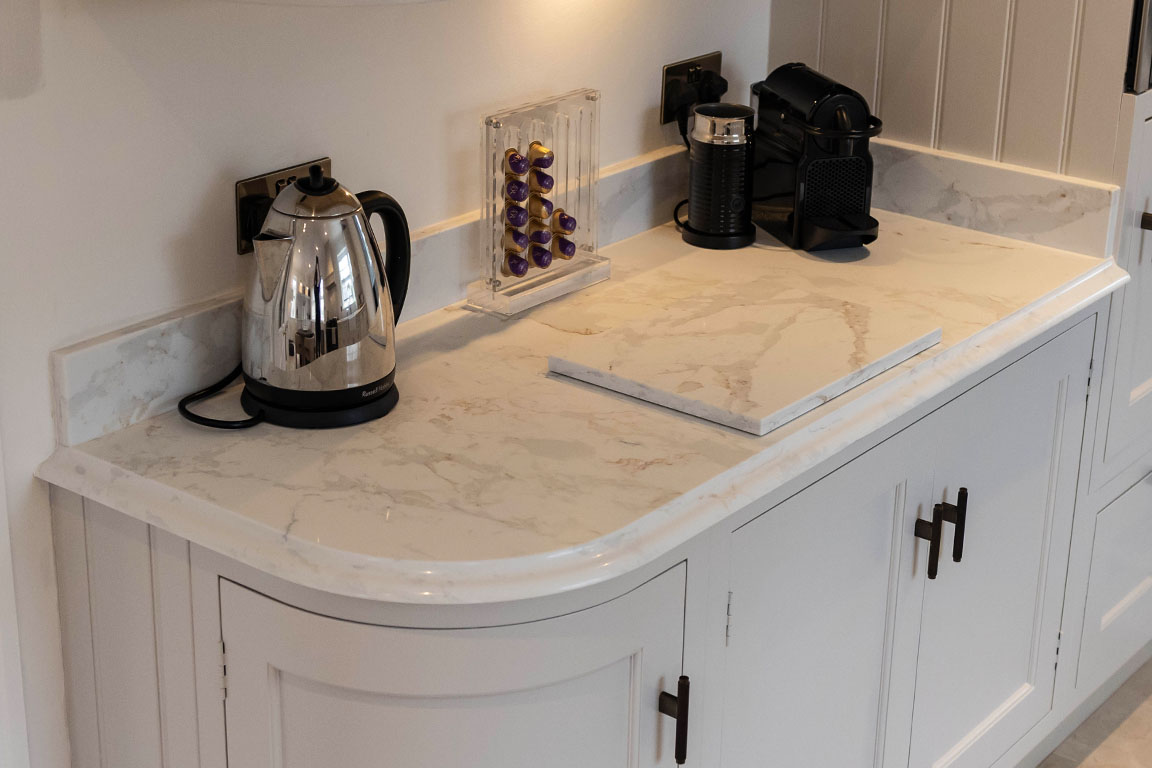
The independent café counter. The counter is the heart of the business and the backdrop to every customer interaction. A 20mm or 30mm quartz counter in a veined or textured finish gives durability, easy sanitising and a premium look that photographs well. Waterfall ends, where the stone continues down the side of the counter, protect the most kicked and knocked part of the unit while adding a high-end feel.
The restaurant open kitchen and pass. Open kitchens put the working surfaces on display. Dekton on the pass handles direct heat from plates and pans, resists scratching from constant plate movement, and looks deliberate rather than industrial. Its resistance to staining from jus, oils and sauces matters here more than anywhere else in the building.
The bar top. Bars deal with acid daily: citrus, wine and spirits all attack vulnerable surfaces. Quartz and sintered stone shrug these off. Natural marble, despite its popularity in bar design imagery, etches on contact with acid and rarely survives commercial bar use gracefully. Where the marble look is wanted, a Calacatta-style quartz achieves the aesthetic without the maintenance liability.
The hotel or restaurant washroom. Vanity surfaces in commercial washrooms take heavy use and frequent chemical cleaning. Stone vanities stay presentable and reinforce the quality signals set elsewhere in the venue.
The outdoor terrace or BBQ area. Outdoor hospitality spaces need UV-stable, frost-resistant surfaces. Dekton performs outdoors without fading or degrading, which is why it has become the standard specification for external kitchens and serving counters.
The Details That Separate a Good Commercial Installation From a Poor One
Material choice is only half the outcome. The fabrication and installation decisions behind restaurant worktops determine how they perform in service.
Templating accuracy matters more in commercial settings than domestic ones, because commercial worktops must fit tightly around equipment, service penetrations and stainless steel fixtures. Laser templating removes the guesswork and prevents the gaps and misalignments that later trap food debris.
Joint placement is another quiet performance factor. Joints positioned in high-wear or wet zones become weak points. An experienced fabricator plans joints away from sinks, hot zones and impact areas, and keeps them tight enough to remain hygienic for the life of the surface.
Installation timing matters commercially too. Every day a venue is closed costs revenue. In-house fabrication shortens lead times because there is no third-party workshop in the chain, and a coordinated template-fabricate-install process can often be planned around a venue’s closure days rather than forcing extra downtime.
Finally, substrate and support: commercial spans, overhangs at seating counters, and heavy equipment loads all require correct support planning. This is routine work for a commercial stone specialist and a common failure point when domestic-focused installers take on hospitality projects.
What This Means for Your Fit-Out Budget
If you are planning a new venue or refurbishing an existing one, three decisions will shape the outcome:
First, zone your specification. Use sintered stone where heat and heavy prep demand it, quartz where hygiene and appearance lead, and reserve delicate natural stones for feature areas only. This targets budget where performance is needed.
Second, specify edges and thickness for the environment, not the brochure. Eased edges and appropriate thickness at impact points prevent the chips that make a young installation look tired.
Third, choose a fabricator with genuine commercial experience. Hospitality worktops involve constraints that domestic projects never encounter, from EHO expectations to installation windows measured in hours rather than days.
Why Hospitality Businesses Work With Meridian Granite
Meridian Granite is a family-run stone specialist based in Pudsey, Leeds, supplying and installing commercial stone worktops for restaurants, cafés, bars and hospitality venues across Yorkshire and nationwide. With more than fifteen years in stone fabrication and over fifteen thousand completed projects, the team handles the full process in house, from laser templating through CNC fabrication to installation.
That vertical integration matters for commercial clients. It means one point of accountability, faster turnaround for time-pressured fit-outs, and direct control over the joint placement, edge profiling and finishing details that decide how a surface performs in service. Meridian Granite works with premium brands including Dekton by Cosentino, Silestone, Caesarstone and Cambria, giving hospitality clients access to surfaces engineered specifically for commercial intensity.
Whether the project is a single café counter or a full commercial kitchen and front-of-house package, the same principle applies: specify the right stone for each zone, fabricate it precisely, and install it to last the length of the lease and beyond.
Frequently Asked Questions
Which stone is best for a restaurant kitchen worktop? Sintered stone such as Dekton is generally the strongest all-round choice for back-of-house areas due to its heat, scratch and stain resistance. Quartz is an excellent option for prep areas and front-of-house counters where direct pan heat is not a factor.
Are stone worktops hygienic enough for commercial food preparation? Yes. Non-porous surfaces such as quartz and Dekton do not absorb liquids or harbour bacteria, wipe clean quickly and stand up to commercial sanitising chemicals, which supports EHO compliance.
How long do commercial stone worktops last? Correctly specified and installed, stone surfaces routinely last fifteen to twenty-five years in hospitality environments, compared with two to four years for laminate in the same conditions.
Can stone worktops be installed without closing the venue for long? With laser templating and in-house fabrication, installation can usually be scheduled around closure days or overnight windows, keeping trading disruption to a minimum.
The Bottom Line
Stone worktops for restaurants and cafés are not a cosmetic upgrade. They are an operational decision that affects hygiene inspections, service efficiency, cleaning workload and the total cost of a fit-out across a lease. Venues that specify stone correctly, matching material to zone and detailing edges and joints for commercial use, get surfaces that still look and perform like new long after cheaper alternatives have been replaced twice.
If you are planning a hospitality project and want advice on the right surfaces for each area of your venue, speak to Meridian Granite. The team can review your layout, recommend materials zone by zone, and provide a full supply, fabrication and installation package built around your opening schedule.